
Introduction We are investigating some issues seen with long term attachment (up to 6 days) of the EECM-BMEC-like cells seen by collaborators in Bern, where they noticed black aggregates on the coated control devices that get worse at day 6.…

Category: μSiM
All things cell culture on the μSiM
Using Histogram Distance Measurements as a Means of Analyzing Flow Cytometry Data

Overview Recently, we performed a series of flow cytometry studies assessing neutrophil (PMN) activation in first generation flow devices. All the relevant data and can be found in a previous post: here. As part of the analysis, we chose to…
Utilizing the μSIM to model brain endothelial barrier changes in Cerebral Amyloid Angiopathy

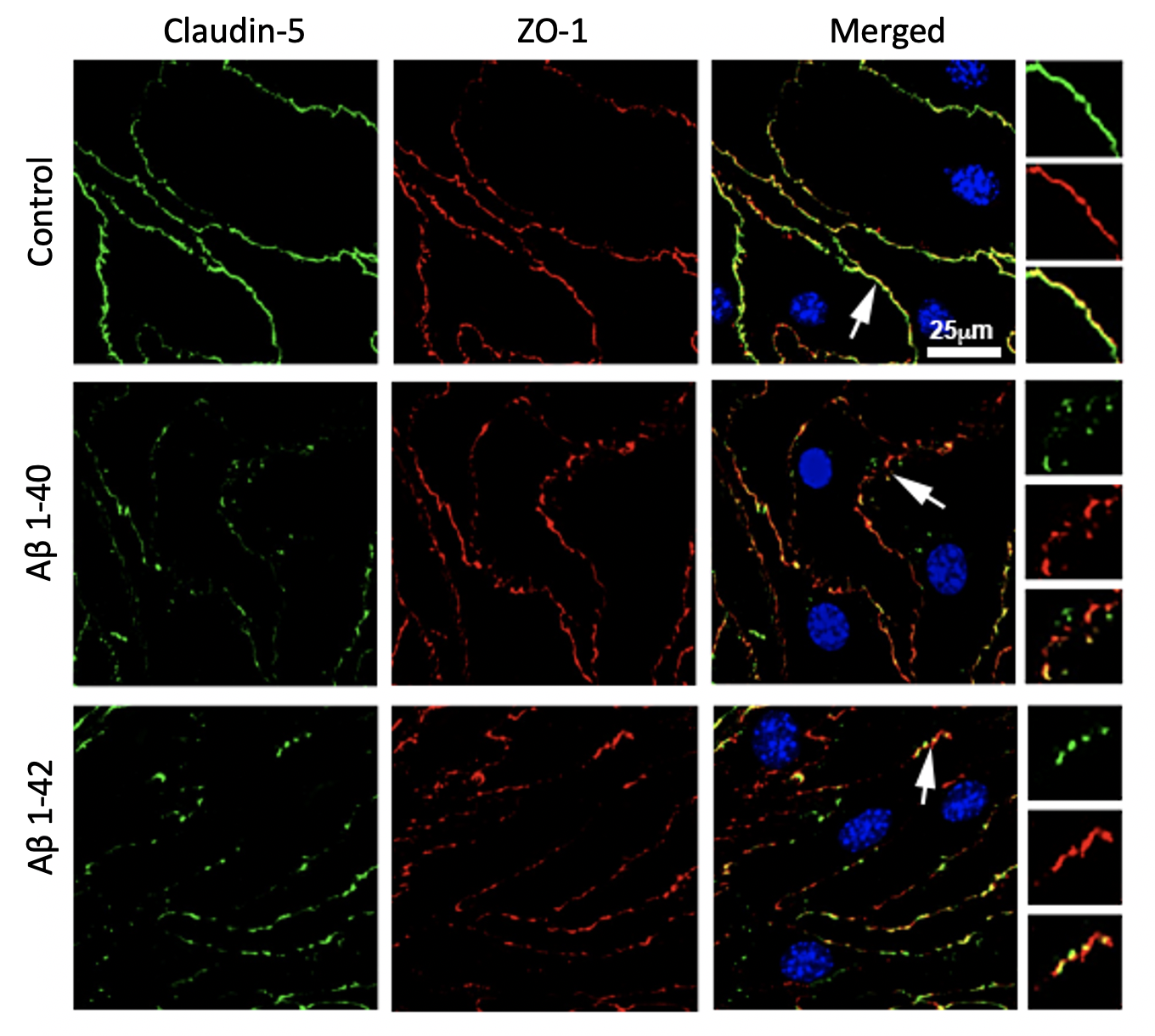
Introduction Vascular hyperpermeability and hemorrhagic stroke are hallmark symptoms of Cerebral Amyloid Angiopathy (CAA), a cerebrovascular disease characterized by amyloid-β deposition around the brain microvasculature. In CAA pathogenesis, vascular Aβ accumulation contributes to structural alterations and loss of integrity in…
Posted in memBrains
AFM Measurements of Glycocalyx in the Upside Down µSiM

Slide deck from Large Group Meeting 12-21-12 (PPT) Access requirements for the AFM cantilver to contact the cells requires the cells to be grown on the membrane surface in what is typically the bottom channel of A-line devices (Typical A-line…
Progress Toward Modeling Inflammation-Mediated Degradation of Basement Membrane Proteins in the μSiM-hNVU

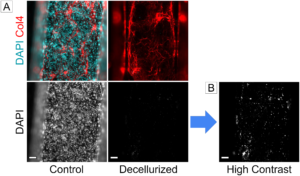
Introduction The blood-brain barrier (BBB) plays an important role in maintaining brain chemistry by restricting the permeability of small molecules and cells. Inflammatory diseases may disrupt the BBB and promote the development of neurological disorders [1]. One potential mechanism of…
Pump-assisted oscillation mixing in μSIM for consistent small volume sampling and measurement from bottom channel.

Background From previous experimental results as well as COMSOL simulations presented in our older posts, we observed a universal non-uniform analyte distribution in the μSIM bottom channel due to limited lateral diffusion rate. This uneven distribution profile will limit our…
Posted in memBrains
A Modular vascular barrier platform with a removable flow module and high resolution imaging (Publication draft)

1. Introduction 1.1 Vascular barriers Functions: Maintain tissue homeostasis, control transport and gas exchange, recruit immune cells during inflammation Figure 1. Schematic illustration of a vasculature barrier in the human body. Endothelial cells as a building element of vasculature barriers…
Posted in memBrains
Developing a Distributable µSiM ‘Transwell’-like Platform…Publication Figure Drafts

Introduction Here, I will post figure drafts for the paper that introduces the modular µSiM (m-µSiM). Figures Remaining data to obtain: Occludin staining in IMR90-4 from UniBe in µSiM. We have tried this after 2 day culture in µSiM, which worked…
R61: 12 Month Progress to NIH Slide Decks

R61; 12 month Progress (Rochester) Small Trans-Agency Blood-Brain Interface Program Investigator Meeting – Agenda_FINAL
Posted in memBrains
IMR90-4 EECM-BMEC-like Cell Analysis in µSiMs
Introduction We are differentiating and validating EECM-BMEC (Extended Endothelial Cell Culture Method-Brain Microvascular Endothelial Cell)-like cells in µSiM devices. See this post and this post for method details and validation in traditional cell culturing platforms. Methods Attempt 1 – Overstimulated cells IMR90-4…
Posted in memBrains
